What Makes a Photo Booth Luxury, and What Is Just Marketing?
Luxury is one of the most overworked words in the event industry.
Add a gold logo, call a filter “glam” and place two velvet ropes beside a camera. Suddenly the internet has another luxury photo booth.
The label is easy. The standard is more demanding.
A truly premium photo booth should look appropriate in the room, photograph guests beautifully, feel simple to use and operate with the kind of preparation that lets the host enjoy the event. The difference lives in the materials, creative decisions and service details, not in how many times the word “luxe” appears on the booking page.
Here is what to examine before paying more for a luxury photo booth experience.
1. The booth belongs in the room
Most event equipment is designed to function first. Its appearance is an afterthought.
That may be perfectly acceptable at a casual party. At a carefully designed wedding, gala or corporate event, a booth can occupy a visible 10-by-10-foot area for several hours. It becomes part of the environment whether anyone intended it to or not.
A premium booth should have considered proportions, materials and finishes. The equipment, lighting and cords should feel organized. The setup should complement the venue instead of interrupting it.
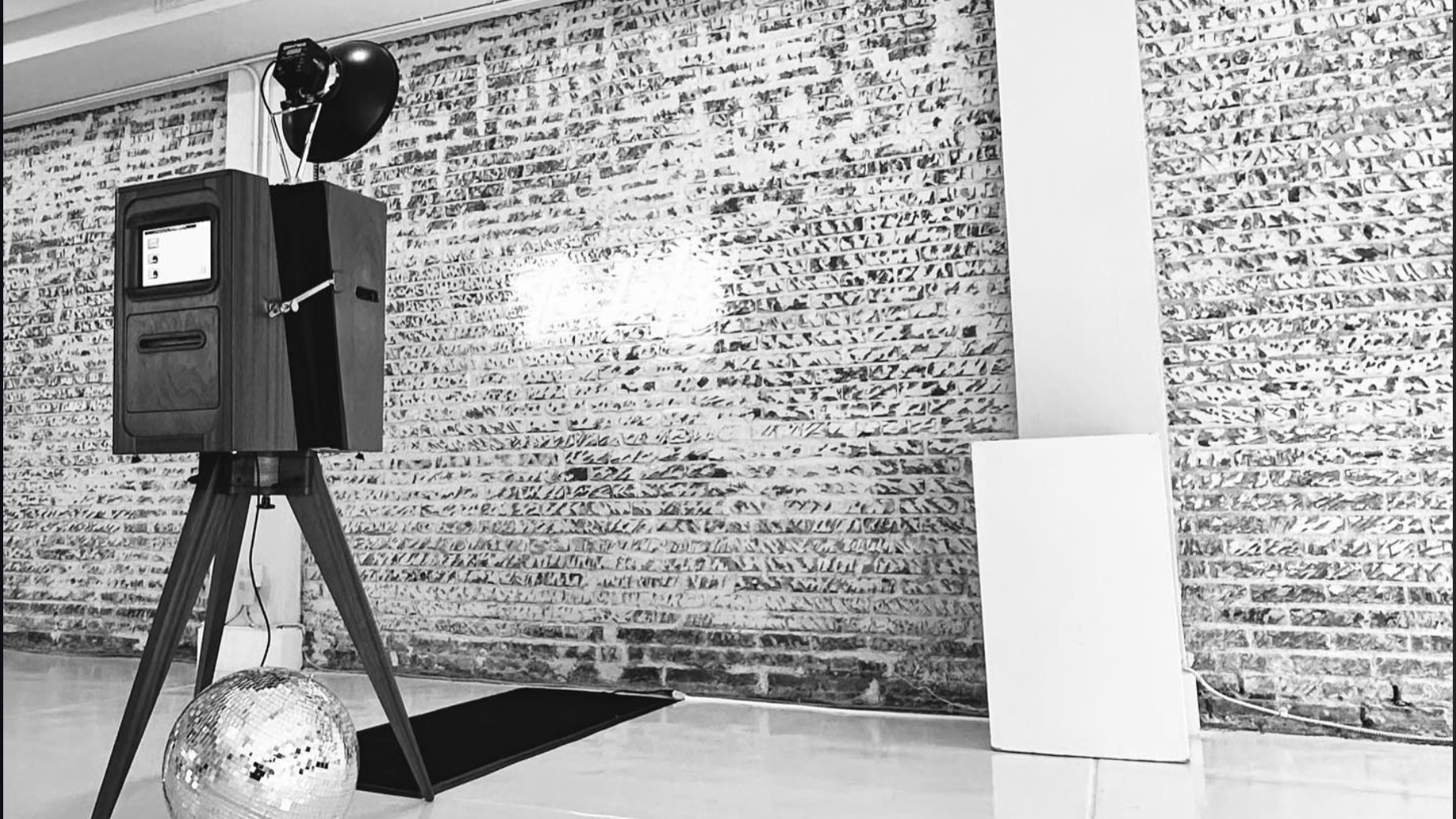
The FlashBar was handcrafted from rich Sapele mahogany with brass and gold-toned hardware. Its design was inspired by the bellows and craftsmanship of an old-world camera, but the booth uses current sharing technology. The materials are not a decorative skin hiding generic equipment. They are part of the object guests encounter in the room.
That is the first test of luxury: would the booth still look handsome before the first photograph is taken?
2. The photographs are flattering without depending on a gimmick
A premium booth should produce a good portrait before a beauty filter, branded border or animated effect is added.
That requires more than a list of camera specifications. Light direction, quality, height, exposure, backdrop choice and guest position all affect the finished image. A powerful camera with careless lighting can still produce a photograph no one wants.
Ask to see complete galleries from real events. Look for consistency across different ages, skin tones, group sizes and clothing. Pay attention to faces at the edge of a group, not only the best portrait selected for the homepage.
The FlashBar uses studio-style lighting and can photograph in full color or black and white. The choice should support the event and the people in front of the camera, not simply follow whichever filter is trending this season.
The second test of luxury is simple: do guests look like themselves on a very good night?
3. The materials are real and the craftsmanship is visible
Luxury is often confused with decoration. Real craftsmanship is quieter.
Wood has grain, depth and variation. Metal hardware develops character. Joinery, proportions and finish become more noticeable the closer someone gets. These details matter because guests experience a photo booth at arm's length, not only in a wide photograph of the ballroom.
The open-concept FlashBar was built to feel more like a piece of event furniture than a device on a stand. The enclosed booth arriving in spring 2027 follows the same philosophy, using wood with metal accents to create privacy and nostalgia without becoming a novelty prop.
An expensive wrap or a trendy color can change the appearance of equipment. Craftsmanship changes the object itself.
4. The styling shows restraint
Luxury does not require a table overflowing with props, signs and costume pieces.
In many cases, restraint is what protects the photograph. A clean backdrop, confident lighting and one excellent detail can create more impact than twenty unrelated accessories.
That does not mean a premium booth must be serious. A disco ball can be great. A custom holiday set can be wonderfully playful. A branded corporate experience can carry color and personality. The difference is that each choice supports one visual idea.
At The FlashBar, props are optional and curated when they make sense. Minimal portraits often give guests more room to be interesting without asking a cardboard sign to do the work for them.
The third test of luxury is whether every visible element appears chosen rather than accumulated.
5. A host understands people, not only equipment
A photo booth can work perfectly and still feel awkward.
Guests may wonder where to stand, which screen to touch, whether a large group will fit or how to retrieve the image. Some will approach immediately. Others need a quiet invitation before joining friends or coworkers.
A professional host removes that uncertainty. The host welcomes guests, explains the experience, keeps groups moving and notices when someone needs help. The technology stays in the background.
Hospitality matters even more at formal events. Guests should not have to troubleshoot a screen in cocktail attire or locate the person responsible for a stalled printer.
Every FlashBar reservation includes a host. That person is part of the experience, not an emergency contact standing nearby.
The fourth test of luxury is how little effort the guest must expend to enjoy it.
6. The print feels like a keepsake
Not every event needs printing. When prints are offered, their size, finish and design should match the quality promised elsewhere.
A standard strip can be charming when nostalgia is the goal. A 4-by-6-inch or 5-by-7-inch portrait offers more room for the photograph. Metallic luster printing introduces movement and depth that are difficult to understand until the print is held in the light.
Graphic design matters too. Names, dates and logos can belong on a print without overwhelming the people in it. A premium design knows where to stop.
The FlashBar includes QR-code access to the event gallery, with printed photographs available as an upgrade. This gives hosts the choice between quick digital delivery and a physical takeaway with more presence.
The fifth test of luxury is whether the finished piece is something guests will display rather than politely accept.
7. Customization begins with a reason
Putting a logo on every screen is not the same as designing a branded experience.
Thoughtful customization begins with the event goal. A wedding may need visual continuity with the invitation and room design. A fundraiser may need sponsor recognition without making each portrait resemble a press wall. A company party may want brand color and energy while still giving employees a photograph they will share.
The right solution could be a custom print, a selected backdrop, a subtle screen design or a fully immersive set. More customization is not automatically better. The work should be proportionate to the occasion.
The FlashBar offers custom set design when the standard portrait setup is not enough. That process is creative work involving concept, materials and coordination, not a menu of clip art.
The sixth test of luxury is whether personalization improves the guest experience or simply proves that customization was purchased.
8. The planning is as considered as the appearance
Beautiful equipment cannot compensate for a late arrival, confused load-in or setup that blocks the venue staff.
Professional service includes communication with the client or planner, awareness of venue restrictions, adequate setup time, power planning, parking and access coordination, insurance and a clear service agreement.
These details are rarely photographed. They are also the reason the photographed part of the experience can happen without drama.
The current FlashBar setup requires a solid, level area of approximately 10 by 10 feet and a dedicated electrical outlet nearby. Outdoor events require appropriate weather protection and advance planning. The FlashBar is licensed and insured.
The seventh test of luxury is whether the service feels calm because someone did the complicated work beforehand.
9. The price and inclusions are clear
Mystery is not a luxury feature.
A premium provider should be able to explain the starting price, the core inclusions and the reasons a proposal changes. Custom work may require a custom quote, but the client should still understand what they are buying.
The FlashBar publishes current pricing and describes the included service before an inquiry. Optional prints, custom set design, extended time and event-specific logistics can change the total.
Clear pricing does not make a premium experience less exclusive. It shows respect for the client and confidence in the value.
The eighth test of luxury is whether the explanation is as polished as the promise.
What is just luxury marketing?
None of these elements is inherently bad. They simply do not prove quality on their own:
No face, about me, introduction, or evidence of human ownership of the brand.
The words luxury, premium, glam or VIP
A black-and-white filter (FlashBar photos are snapped in monochrome)
Velvet ropes or a red carpet
A ring light
A long list of digital effects
Trendy, mass produced, white metal equipment
A high price without justification
A wall of logos
A black-and-white portrait can be beautiful. Velvet ropes may suit a specific concept. Unlimited sessions are useful. A high price may reflect exceptional work.
The mistake is treating any one of those features as evidence that the entire experience is premium.